 by spencer k
You pull up your Seller Central statement and there’s a new run of small deductions you don’t recognize — a dollar or two at a time, dozens of them, tied to ASINs you know have been getting returned a lot lately. That’s the Amazon returns processing fee, and if your return rate has been creeping up, it’s not a one-time thing. It’s a recurring cost that keeps charging as long as the return rate stays where it is, and it’s easy to miss until you go looking for why your payout dropped.
What the Amazon returns processing fee actually is
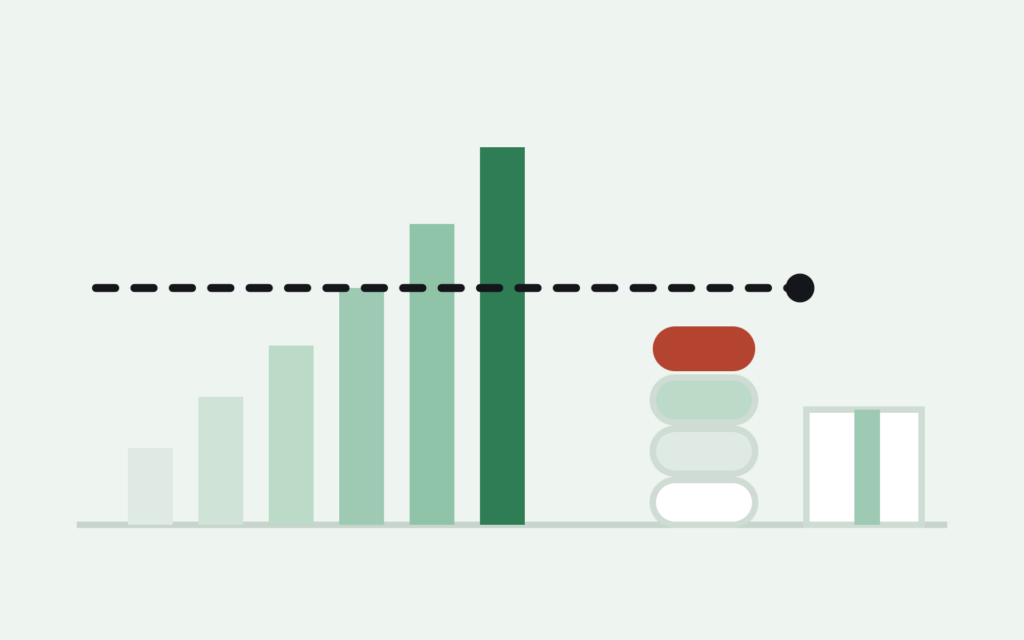
The returns processing fee is a per-unit charge Amazon applies once a product’s return rate crosses the threshold set for its category. It isn’t charged on every return — only on the units returned above whatever percentage Amazon has decided is normal for that category, measured over a rolling window that typically runs the ship month plus the two months after. Miss the threshold entirely and you owe nothing. Cross it, and Amazon starts billing per returned unit above that line, on top of whatever refund or replacement cost you were already absorbing.
What’s changed recently is scope. The fee used to sit mostly on apparel and a handful of return-heavy categories. As of recent fee schedules, it applies far more broadly — which means sellers in categories that never used to think about return rate as a cost line are now seeing it show up for the first time.
How the return rate threshold works
Every category carries its own threshold, and they vary more than you’d expect — some sit under 5%, others run closer to 9%, depending on how return-prone that category typically is. Apparel and footwear work differently than most other categories: instead of only charging on units above the threshold, they’re charged per returned unit regardless of your overall rate, which is part of why clothing and shoe sellers have dealt with this fee the longest.
For most other categories, only the units over the line get charged. If a category’s threshold is 8% and you shipped 1,000 units with 110 returned, the fee applies to the 30 units above the 80-unit line, not the whole 110. That distinction matters when you’re estimating what a bad month is actually going to cost you — it’s the overage, not the whole return count.
Seller Central’s returns dashboard shows your current rate against the category threshold, updated regularly enough that you can catch a climbing trend before it triggers a full billing cycle. Checking it occasionally is worth the five minutes, especially on any ASIN where you’ve noticed returns picking up.
What’s exempt from the fee
A few carve-outs keep this from hitting every seller on every ASIN:
- Low-volume products — items shipping under roughly 25 units a month in a given category generally don’t accumulate enough return volume to trigger the fee.
- New launches — Amazon has offered a grace period on returns fees for a set number of units on newly launched parent ASINs, recognizing that early sales data is noisy.
- Amazon-caused returns — returns marked as damaged by Amazon or delivered late by Amazon typically don’t count against your rate at all, since the fault isn’t the product’s.
None of that helps much if the return rate is genuinely coming from the product — sizing, durability, a description that oversells what’s in the box. That’s a listing and quality problem, and no exemption fixes it.
The fee is the smallest part of the actual cost
Here’s what tends to get missed: the per-unit charge on your statement is the smallest number in the whole situation. Every unit that comes back also has to go somewhere. Some of it is genuinely resellable. A chunk is cosmetically damaged, missing parts, or opened and repackaged badly. All of it sits in storage — yours or Amazon’s — accruing carrying cost while you decide what to do with it, and a rising return rate usually means that pile is growing faster than you’re clearing it.
If you’re already dealing with a backlog of returned units, that’s a different problem than the fee itself, and it’s one we’ve written about directly — see our guide on how to sell customer returns in bulk for how to grade and price a mixed-condition lot instead of relisting it unit by unit. And if the returns are coming back to you via a removal order rather than staying in Amazon’s system, it’s worth knowing what removal actually costs once storage and labor are counted, since that number often dwarfs the returns processing fee itself.
Fixing the rate vs. clearing what’s already come back
These are two separate jobs, and it’s worth treating them that way instead of trying to solve both at once. Fixing the return rate is a listing and product problem — tightening size charts, adding clearer photos and dimensions, catching a defect batch before it ships more units into the wild, or pulling a chronically high-return SKU entirely if the fee and the refunds together are eating the margin. That work takes weeks to show up in your rate, since the threshold is measured on a rolling window, not reset instantly.
Clearing what’s already sitting in returns is a different, faster job. Every week those units sit around waiting for a decision is a week of storage cost with nothing recovered. Once you’ve got more than a handful of returned units on hand, the question isn’t whether to deal with them — it’s whether you’re going to sort and relist them individually or move the lot at once to someone who’ll take the mixed condition off your hands in one transaction.
When it’s time to just move the lot
If you’re spending more hours sorting and relisting returns than the extra per-unit price is worth, or the returns keep arriving faster than you can process them by hand, that’s usually the signal to stop treating each unit as its own project. A bulk sale trades a bit of per-unit price for getting the whole pile off your books and the storage clock stopped in one move — often worth more than the marginal gain from relisting each item yourself, once your time is actually counted.
If you’ve got a growing stack of returns, aged inventory, or overstock and want a number before you decide what to do with it, get an instant quote on the lot and see what it’s worth moved all at once.
Frequently asked questions
How is the Amazon return rate threshold calculated?
It’s measured per category over a rolling three-month window starting with the month a unit shipped. Your return rate for that window is compared against your category’s threshold, and the returns dashboard in Seller Central shows where you currently stand.
Do I owe the returns processing fee on every returned unit?
For most categories, no — only on units returned above your category’s threshold. Apparel and footwear are the exception, where the fee applies to every returned unit regardless of your overall rate.
What should I do with returned units instead of paying to store them?
Grade them roughly by condition — resellable, open-box, damaged, salvage — and either relist what’s worth the labor or move the mixed lot to a bulk buyer. Letting returns sit accumulates storage cost with nothing recovered in the meantime.